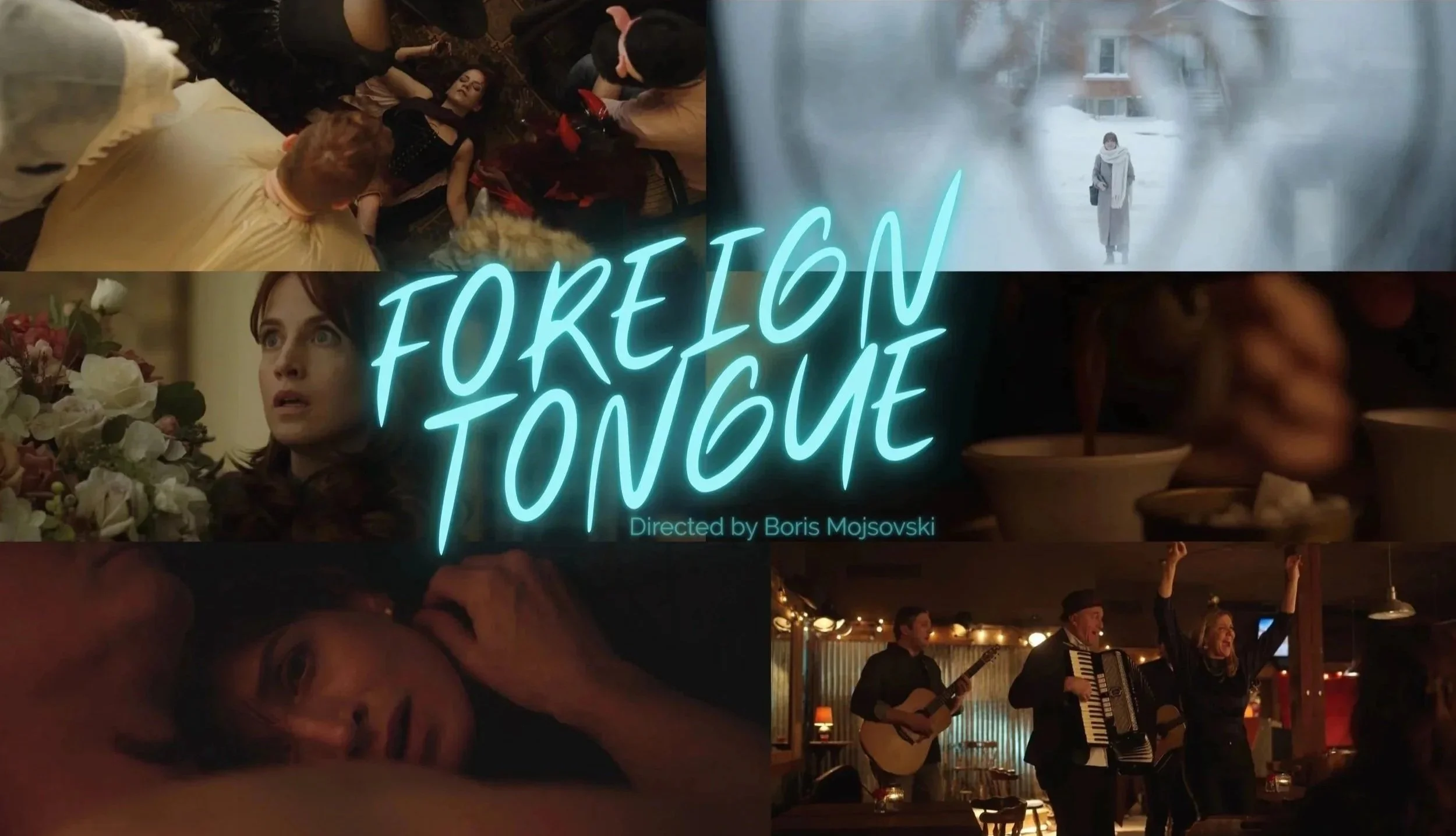
When a cynical North American woman wakes up speaking with a Bosnian accent, she becomes the most unlikely “immigrant”.
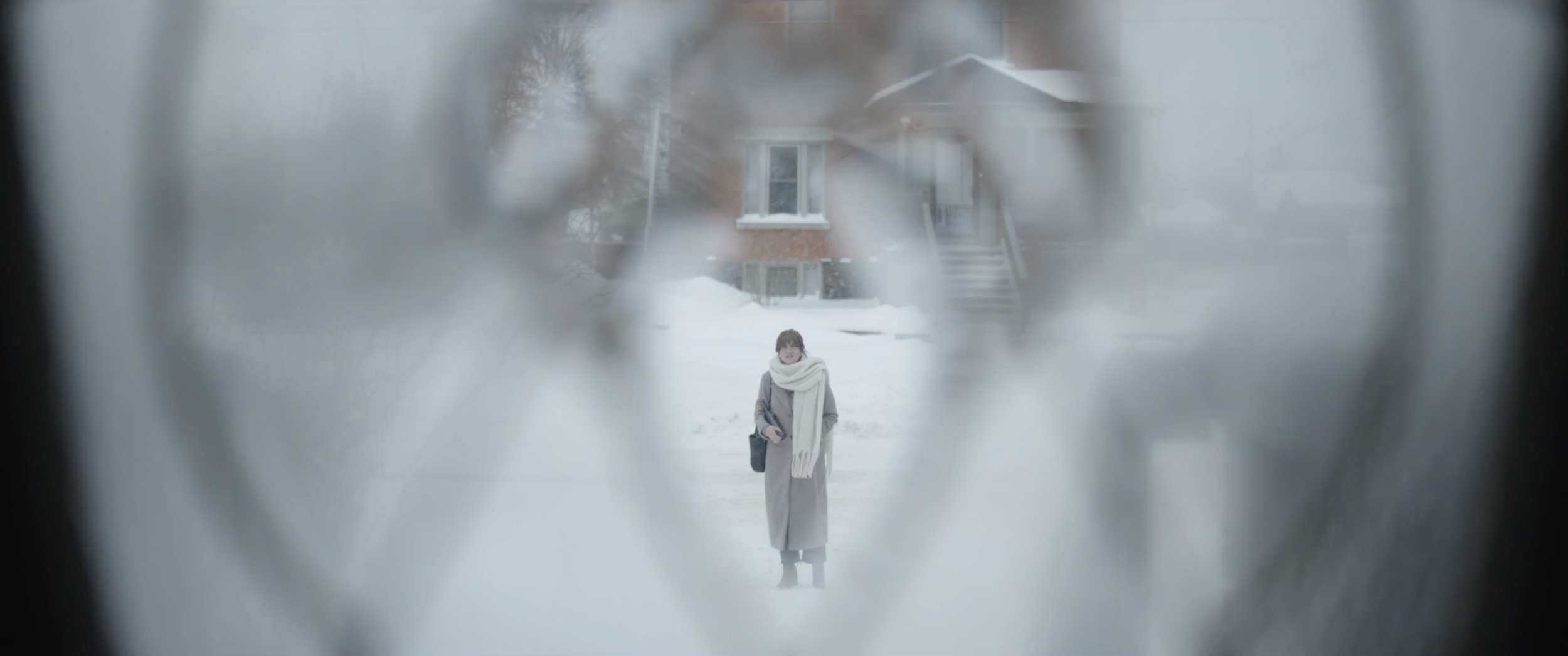
It’s not easy being a foreigner. Certainly not easy being an immigrant.
While Kathy Woodrow is neither of those things, she is unhappy, single, and profoundly lonely-everyone around her knows it.
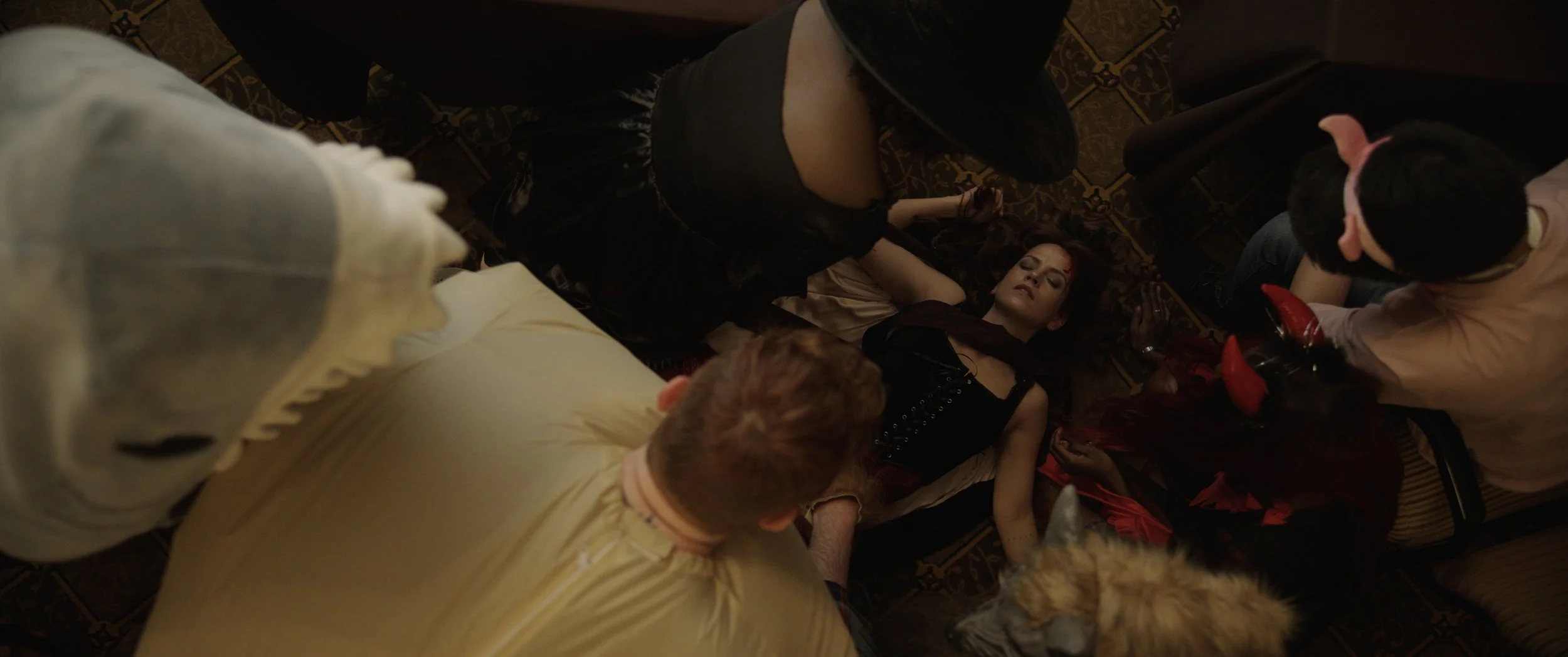
Her passion for wine is a “coping mechanism with a cork,” — behind the pompous enthusiasm lurks a drinking problem which comes to a head at a speed dating event, where, after a few too many glasses of bad Pinot and a heavy pour of her trademark cynicism, Kathy has a dramatic fall. Тhe head injury lands her in a coma.
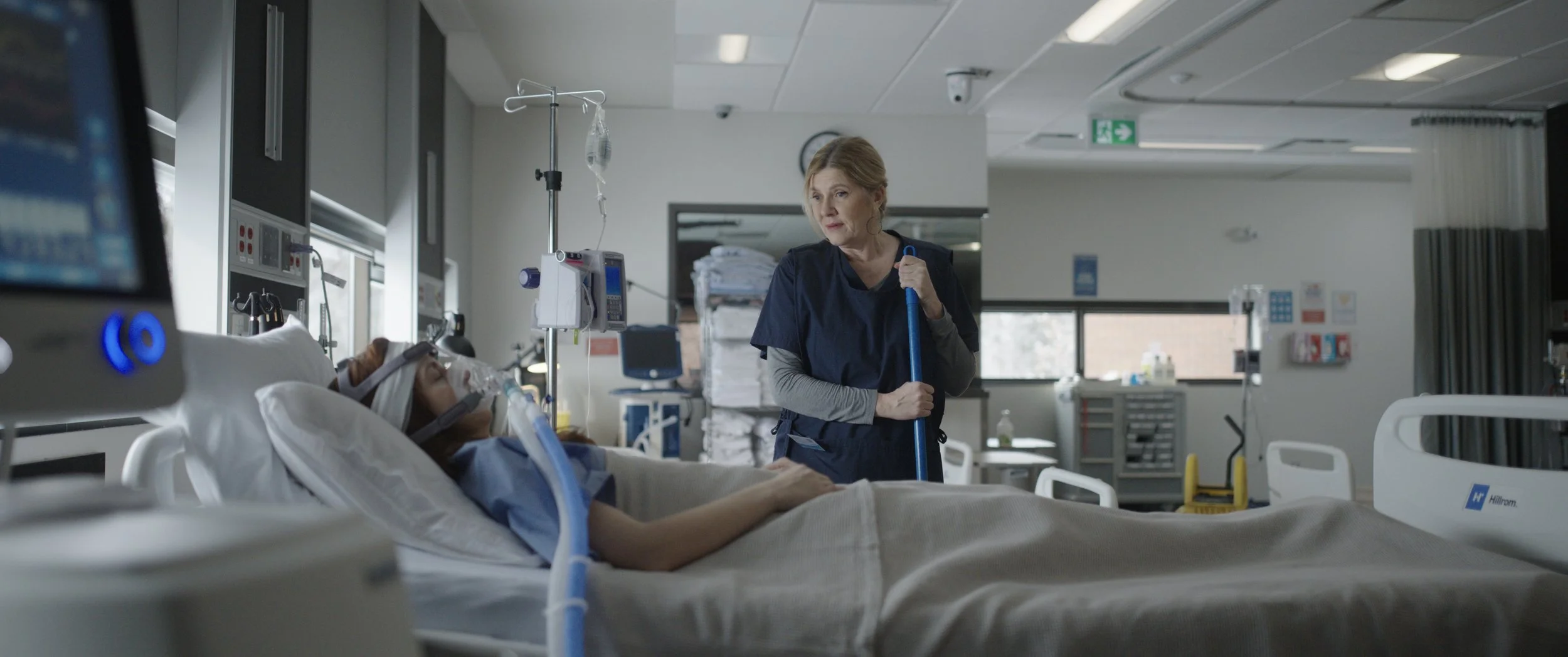
When Kathy wakes up, she speaks with a thick Bosnian accent.
According to the baffled neurologist, she has “foreign accent syndrome”—a real but extraordinarily rare condition, with only 78 known cases in recorded history.
And just like that, Kathy becomes a foreigner. Not in the legal sense. Not in any tangible, passport—obtaining way. But rather in the deeply inconvenient, identity—shattering, “why is the barista asking me where I’m from?” kind of way.
Now a foreigner.
To herself.
To her friends.
To the world she thought she knew.
Kathy Woodrow has become what she least expected:
A foreigner... within.
Directed by
Boris Mojsovski
Written by
Boris Mojsovski & Cynthia Ashperger
Story by
Cynthia Ashperger
Produced by
Munire Armstrong, Felipe Rodriguez & Boris Mojsovski
Cinematography by
Fraser Brown CSC
Edited by
Julia Blua
Starring
Kimberly-Sue Murray, Steve Byers, Cynthia Asperger, Janet Porter, Rachael Ancheril, Jasmin Geljo, Paulino Nunes, Aharon Jinjihashvili, Greg Bryk, Cas Anvar, Lara Arabian, Johnathan Sousa & Mladen Obradovic
Director’s Statment
Following a bizarre accident, Kathy develops Foreign Accent Syndrome and begins speaking with a heavy Bosnian accent. What unfolds is a journey through alienation, belonging, and the politics of perception.
Foreign Tongue is a film about identity—told through magical realism, absurdity, and deep emotional truth. At its center is Kathy, an anti-archetype: a white, North American woman who becomes the most unlikely “immigrant.”
What excites me most, philosophically, is the inversion at the heart of the film: an insider experiences the world as an outsider. Kathy, born and raised in North America, finds herself, after a strange and absurd twist of fate, thrust into the disorienting, alienating journey so many immigrants know intimately. She becomes a symbol, yet she isn’t “one of us.” The paradox of Kathy allowed us to construct a world that invites the audience to experience the immigrant journey through the eyes of the establishment.
On a personal level, I’ve lived many of the emotional beats in this film—the language barriers, the cultural misreadings, the isolation, and the resilience. I wanted to express those truths through Kathy’s journey, not with anger or cynicism, but with lyrical absurdity, quiet humour, and above all, empathy.
It meant so much to hear someone say, after a screening: “Foreign Tongue is a love letter to the immigrant experience.”